Tests that read an animal’s condition, information for understanding treatment.
Telomere · Oral microbiome · Cancer genes · Hereditary diseases. A testing partnership that connects specialized analysis with the veterinarian’s explanation.
Analysis by specialists, explanation alongside clinical care.
We outline a partnership approach that connects clinical care with specialized test information so that a pet’s condition can be understood more fully. The goal is to understand the test information provided by the analysis lab together with the animal’s condition as assessed by the hospital.
DNA EVER
A specialized testing lab, introduced here to help you understand test information and analysis technology. Its official website presents genetic testing and molecular diagnostic technology, and links its animal disease testing area to the DNAGENICS website.
DNAGENICS
Its official website presents the ‘Banryeoae’ testing services for companion animals, where the PetAge360, oral microbiome, cancer gene and hereditary disease tests can each be viewed.
Analysis lab
Samples and analysis
Responsible for each test’s collection criteria, analysis method, measured items and report information.
Hospital · Veterinarian
Clinical care and interpretation
Explains what the results mean and whether follow-up care is needed, looking at symptoms, history and clinical findings together.
Owner
Sharing condition and progress
Shares the pet’s basic information and changes in daily life, and follows through on what was discussed in consultation and on later observation.
We introduce each company’s role and name separately. A company’s description of its testing services and medical judgment about an individual animal are different processes.
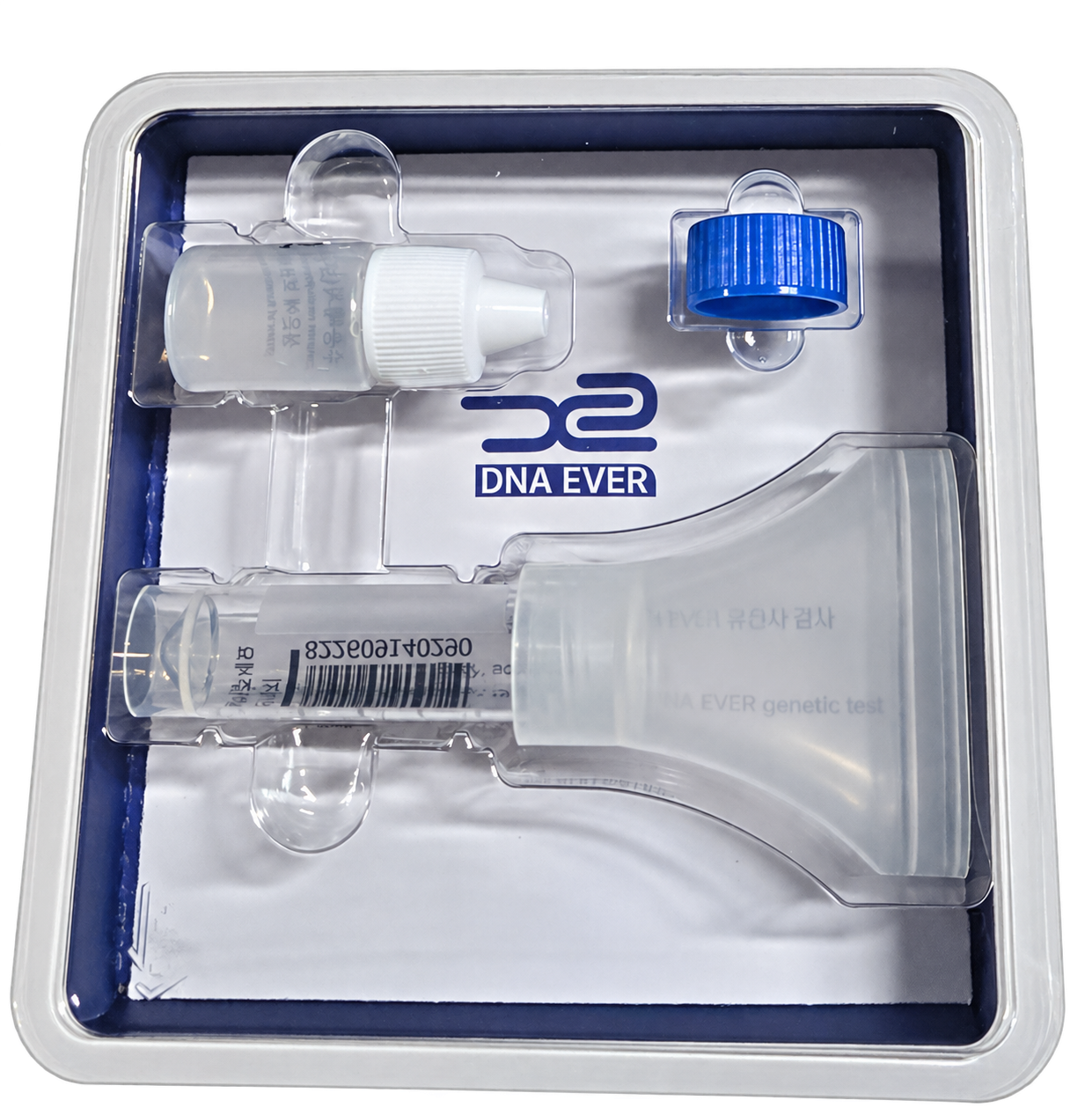
Actual photo of a test kit from our records · the contents and conditions of use of each product are confirmed separately
DNA EVER / RECEIVED MATERIAL
Newly received company materials: distinguishing the testing fields.
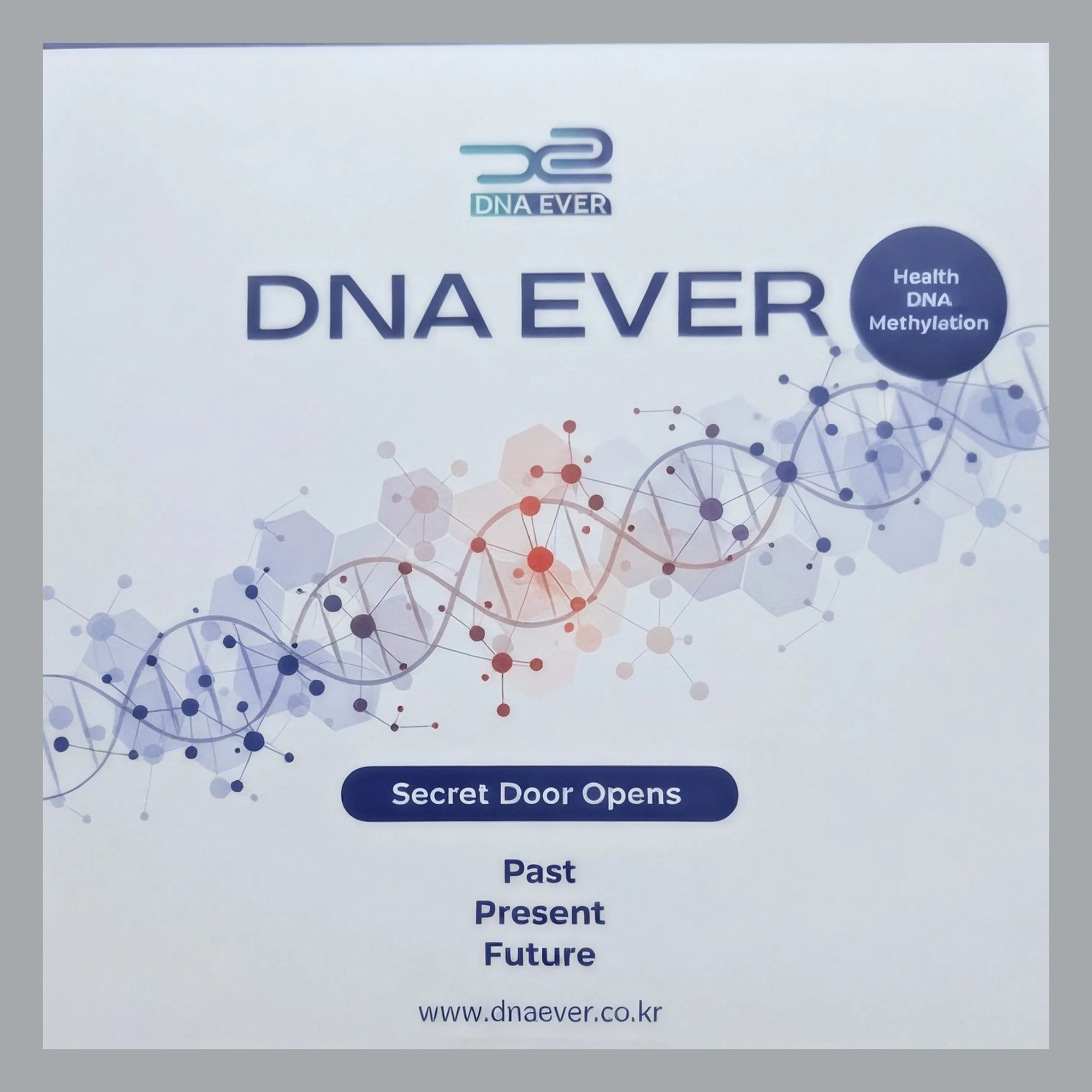
The newly received set includes DNA EVER company materials and test guides and reports for humans. They are reference material for understanding the animal testing services separately from the company’s other testing fields.
DNA EVER company material cover · original photo · separate from information on any specific veterinary product
Each target and product has its own criteria.
The grade ranges in the new human materials are not the same as those in the existing official descriptions of the animal tests. Human sampling methods, prices and disease coverage are not carried over into guidance for companion animals either. Actual animal reports are interpreted according to the analysis and calculation criteria of the product concerned.
The cover of the PetAge360 image in the new set shows a photo of a pet, but the enclosed explanation states that the actual report is from a human test. We do not decide what a test is for from the cover image alone; we check the main text and the accompanying explanation together.
Distinguish genetic information from whether the disease is currently present.
The information below summarizes the services the testing lab presents on its official website. The exact items and targets of each product are confirmed according to the respective test description.
01 / PETAGE360
Telomere length: information linked to aging research.
The testing company describes PetAge360 as a service that analyzes telomere length from an oral sample. The process in the official description runs from collecting oral epithelial cells to DNA purification, qPCR-based analysis, and a report and consultation.
What information does it cover?
According to the company, it includes average telomere length, aging-related indicators and comparison information. It is important to understand by what method and criteria each value is calculated.
How are follow-up tests viewed?
When comparing changes, the collection method, analysis method and conditions at the time of testing must be considered together. Changes in values and the animal’s actual symptoms, daily life and clinical progress are each recorded separately.
Testing and treatment are different.
Testing is a process of measuring telomere-related information. The test itself is not a treatment that lengthens telomeres, and its results are not read as determining an individual animal’s lifespan or the success of a treatment.
Oral health information from the microbes in the mouth.
MotherPet is a service that analyzes the oral microbiome of companion animals. The company presents information on beneficial and harmful bacteria, oral health care, and analyses of associations between the oral microbiome and systemic diseases.
What to discuss along with the results
The microbial items analyzed and the criteria for the results
The owner’s observations, such as oral condition, bad breath and changes in the gums
Previous oral care and treatment history
Care and any need for further treatment, to be confirmed in a consultation with the veterinarian
Association is not diagnosis.
The company itself states that its chronic disease information is data predicting correlations between the oral microbiome and systemic diseases. These results alone are not read as confirming any specific systemic disease.
The official website describes it as a test that provides tumor-related risk information through oral sample collection, nucleic acid extraction and genetic analysis. The levels and analysis items in the report are information based on the testing lab’s criteria.
Focus of the test description
A service that analyzes tumor-related genetic information and provides a risk rating and report based on the company’s criteria.
What to look at in clinical care
Symptoms and history, as well as actual examination and test findings, must be reviewed together. A risk rating is not the same as a confirmed diagnosis that a tumor is currently present.
We do not interpret any specific test as able to detect or rule out every tumor. Questions about the results are addressed in a consultation with the veterinarian, together with other clinical information.
Based on genetic information, making care questions more specific.
The company explains that it analyzes DNA from an oral swab sample and provides disease-related genetic information in a report. Its official page lists areas related to the heart, joints, skin, metabolism, kidneys and liver.
Three questions for reading the results
Which items apply to the animal’s species and breed?
What do the genetic results mean, and what are their limitations?
Taking family history and current condition into account, what observation or care is needed?
Having genetic risk information is different from the disease having developed. Exact items, variants and applicable animals are confirmed with the product’s test criteria and the veterinarian’s explanation.
From collection to explaining results: know the process before you start.
Explain the purpose and items of the test.
First understand what you want to know, what information the test can and cannot provide, which animals it is for, and how to prepare.
Prepare the referral information and sample.
The animal’s information is accurately matched with the referral details, and the sample is collected according to the guidance for each test. Precautions before collection follow the instructions for the kit concerned.
Send the sample together with the referral information.
After confirming that the sample identification matches the request form, follow the storage, packaging and shipping conditions specified by the testing lab.
The specialized lab provides analysis and a report.
Analysis follows each test’s method. If there is a problem with the sample’s condition or quality, you will be told whether re-collection is needed and what happens next.
Connect to the veterinarian’s explanation and follow-up.
The results are read together with symptoms, history and clinical information, and any questions about further care or management are discussed.
Collection methods follow each product’s guidance.
Do not change diet, medication or care based only on general information from the internet. Exact collection and shipping instructions should be obtained for the specific kit you will use.
READING THE REPORT
On the report, five things to always check together.
01
Whose sample is it, and what kind?
Check the animal’s identification, collection date, sample type and result date.
02
What was measured or analyzed?
Look at the test name, items, analysis method, units and how the results were calculated.
03
What was it compared against?
Ask for an explanation of the reference group and what the grades mean, and whether the standard applies to the animal’s species, breed and age.
04
What can and cannot be known?
Distinguish directly measured values, the analysis lab’s interpretation, and information on associations with disease.
05
What should be looked at in the next visit or observation?
Discuss further consultation and follow-up observation based on current symptoms and clinical information.
These items are a checklist for understanding results. They are not a score or report created for an actual patient.
LINKING ANALYSIS AND TREATMENT
Testing and treatment: separate roles, connected.
Maru’s core treatments and testing are linked by sharing information. Obtaining test results does not mean that every animal receives the same equipment or treatment.
Analysis information
What was observed?
Understand the values obtained by the test method and the analysis lab’s explanation.
Clinical judgment
How should it be applied?
The veterinarian reviews whether treatment or follow-up care is needed based on the animal’s actual condition.
Progress records
What changes occurred?
Record test values and changes in symptoms and function separately, and consider concurrent care and comparison conditions together.
Changes in values before and after treatment alone do not establish the effect of any specific device. We look at each animal’s progress records together with the research evidence for the technology concerned.
Each test has a different purpose and provides different information. The genetic and risk information on this page alone should not be interpreted as confirming or ruling out every disease.
Can a telomere test tell me how long my pet has left to live?+
An individual animal’s remaining lifespan is not determined as an exact date or period. The test method, comparison criteria and clinical information must be understood together.
If the results are good, is no clinical care needed?+
Test information and current symptoms must be considered together. If there are symptoms or the condition changes, the need for care is not judged from the report alone.
How do the roles of the testing lab and the hospital differ?+
The analysis lab explains the test method, items and analysis results. The veterinarian decides what the results mean and the next step in care, based on the animal’s condition and clinical information.
Where can I check costs and turnaround time?+
They vary by test type and actual intake conditions. Items, costs, expected turnaround and re-collection conditions should be confirmed with the staff before testing. This page does not promise any specific price or time frame.
When is retesting done?+
There is no fixed interval. It is discussed based on the purpose of the test, the animal’s condition, previous results and clinical judgment.